
 By Michael Caine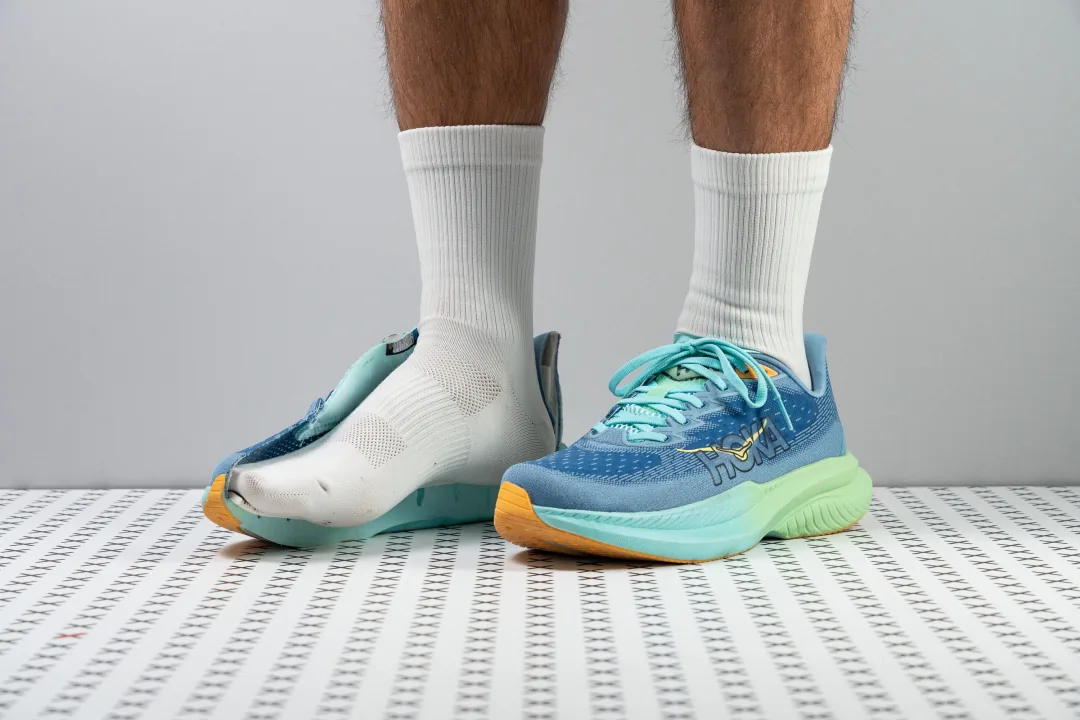
A fast shoe can feel wrong when the foam sits too high, too soft, or too far away from the road. The Hoka Mach 6 steps into that concern with a firmer, quicker ride built around updated stack height, lower weight, and a road-ready shape that makes sense for runners who want one pair for daily miles and faster days. That is the point worth noticing. Not the hype. Not the colorway. The geometry.
For U.S. runners tracking running gear updates, the better question is simple: does this road running shoe feel quicker because it is lighter, or because the platform puts your foot in a better spot? HOKA lists the model with a super critical foam midsole, strategic rubber outsole coverage, 8.20 oz weight, and a 5 mm heel-to-toe drop. Independent testing summaries list the men’s stack at 37 mm heel and 32 mm forefoot, with women’s at 35 mm and 30 mm. Specs will not tell you if a shoe suits your stride, but they can tell you what kind of run the shoe is trying to create.
Why Hoka Mach 6 Stack Height Changes the Feel Underfoot
Stack height is easy to treat like a spec sheet number, but that misses the way it shows up on a run. A few millimeters can change how early your heel settles, how steady the forefoot feels in a turn, and how much trust you have when the pace drops. The sixth Mach does not feel like a soft recovery cruiser. It aims for a lighter, springier feel that still protects your legs from pavement.
That balance is harder than it sounds. Add too much foam and the shoe can wobble. Make the foam too firm and it can feel harsh on tired calves. The better design choice is not always “more cushion.” It is cushion that keeps its shape when your stride gets sloppy.
More foam does not always mean a softer ride
A taller platform can fool people at first glance. You see more foam and expect a couch-like landing. Then you run a mile and realize the shoe is asking you to move. That is where this model is more interesting than a plain max-cushion trainer.
The super critical foam gives the platform a lively push without making the shoe feel loose under the foot. HOKA describes the midsole as light and resilient, and the outsole as strategic rubber coverage meant to add durability without extra weight. That pairing matters because road runners often want softness on Monday and snap on Thursday.
The non-obvious part is that a firmer ride can feel easier over time. A shoe that sinks too much may feel pleasant in the store, then turn sloppy during tempo work. A little firmness gives your foot something to press against. This is where a quick try-on can mislead you: standing still rewards softness, while running rewards timing.
The 5 mm drop keeps the ride centered
The listed 5 mm drop puts the shoe in a middle lane. It is not flat in the way some low-drop trainers feel, and it is not tipped forward like many classic high-drop road shoes. For runners used to 8 mm or 10 mm models, the first outing may feel calmer through the heel.
That calm can help on rolling neighborhood routes. Think of a runner in Austin doing six miles before work, moving from sidewalk slabs to asphalt shoulders to a short climb near home. A shoe with too much heel bias can feel clunky there. A centered platform lets the stride settle without asking the calf to do all the work.
There is a catch. If you have spent years in higher-drop shoes, do not judge this model after one hard run. Use it for an easy day first, then a controlled progression. The geometry rewards patience more than ego. The updated stack height also changes cornering more than many shoppers expect, because a taller shoe only works if the base still feels calm through turns, curbs, and crowded paths.
A Road Running Shoe Built for the Awkward Middle of Training
Most runners do not live in clean categories. They are not doing easy miles in one shoe, track work in another, long runs in a third, and race day in a fourth. They want a daily trainer that can handle the messy middle: a slow start, a few quicker miles, tired legs, and a final stretch where form starts to fade.
That messy middle is where shoe marketing often gets too neat. Real training plans have bad sleep, hot weather, tight calves, and routes interrupted by traffic lights. A road running shoe has to keep working when the run is not clean. This is where the Mach’s lighter build has a chance to matter more than its showroom feel.
It fits the runner who changes pace without planning it
The best use case here is not a perfect workout. It is the run that changes because you feel better than expected. You leave the house for five quiet miles, hit a smooth section of bike path, and suddenly you are running the last two miles faster than planned.
That is where the Mach line makes sense. It does not need a plate to feel quick. It also does not need a giant heel to feel protective. The combination of low weight, medium stack, and firmer foam gives you enough response for pace changes without turning the shoe into a race-only tool.
For many U.S. runners, that is more useful than another specialty shoe. A parent squeezing in miles before school drop-off, or an office worker heading out after a long commute, may not have time to match shoes to workouts. One pair has to cover a lot. This does not make the shoe perfect for every run, but the middle miles that fill most training logs are where a lighter daily trainer earns its shelf space.
Durability matters more than the first bouncy mile
Early excitement can hide a weak outsole. A shoe may feel bright for the first week, then wear down under the outer heel or ball of the foot. The Mach update answers that concern by moving away from an exposed foam feel and adding targeted rubber where the road does the most damage.
That does not mean the outsole turns it into a heavy trainer. HOKA’s own product copy frames the rubber as strategic coverage, not a full slab. The point is restraint. Put material where it earns its place, leave the rest alone.
Here is the counterintuitive bit: less rubber can sometimes make a shoe more pleasant. Too much outsole can mute the foam and add a flat slap on dry pavement. The better choice is not always “more durable material.” It is the right amount in the right place. Runners in colder states should also think about feel, not only wear, because cold pavement can make firm shoes feel firmer.
Fit, Upper Feel, and the Daily Trainer Test
A fast-feeling midsole cannot save a poor upper. If the tongue slides, the collar rubs, or the forefoot pinches after three miles, the run becomes a negotiation. The sixth Mach pays attention to that quiet part of shoe design, which is why it may work for people who normally skip lighter trainers.
Fit also decides whether the stack feels stable. A shoe can have good geometry on paper and still feel wrong if your foot sits off-center. That matters for runners who land slightly on the outer heel, push hard through the big toe, or need more space near the forefoot. The upper is not decoration. It is the steering system.
The upper should disappear once the run starts
HOKA lists a creel jacquard upper with zonal breathability, a streamlined collar foam package, and a dual internal gusset. In plain language, the shoe is trying to hold the foot without adding a thick, padded feel. That is the right call for a lighter road model.
A thick upper can feel safe when you lace up. On the road, it can turn warm and stiff. A thinner upper is better when it locks well, worse when it creates lace bite or lets the tongue wander. The gusset is the small detail that can decide which side this shoe lands on.
Try it the way you run. Wear the socks you use for normal miles. Walk down a slight hill before you buy, if the store allows it. If your toes hit the front or your midfoot spills over the side, the foam story does not matter. A good upper also helps late in the run, when form gets lazy and a small midfoot slide can turn into hot spots.
Wide sizing makes the shoe more realistic
Road shoes often fail wide-foot runners by pretending stretch equals fit. It does not. Stretch can reduce pressure, but it cannot create a better platform under the foot. The value of a wide option is that it gives the foot room without turning the upper into a loose bag.
The official U.S. product page shows regular and wide width choices. That may sound minor, yet it changes who can treat this as a daily trainer. A runner with a broad forefoot might enjoy the midsole but still need more space across the metatarsals.
The APMA advises matching athletic shoes to the activity and foot type, and it notes that running shoes are built for high-impact forward motion. That makes fit more than a comfort issue; it shapes how the shoe helps you move. APMA’s sports shoe guidance is a smart reference if you are unsure how your arch or wear pattern affects shoe choice. The quiet test is whether your foot stays centered when you are tired. A good foam platform only works when your foot is sitting where the designer expected.
How It Compares With Softer and Faster Options
The most useful way to judge this shoe is not by asking whether it is the softest or fastest option on the wall. It is neither. The better test is whether it gives enough comfort for daily miles while keeping enough edge for days when you want pace. That is the space where many runners spend most of their year.
Comparison should start with your week, not the shoe wall. If most of your runs are slow and sore, a soft cruiser may win. If most of your runs include steady sections, strides, or short tempo blocks, this type of daily trainer makes more sense. Buying by category alone can send you toward a shoe that looks right but feels wrong by mile three.
Softer shoes may feel kinder, but not always faster
If you want a soft landing above all else, this may not be the most natural match. A plush shoe can be better after a race, during a recovery block, or when your legs feel beaten up from hills. There is no shame in choosing comfort first.
Still, softness has a cost. On a humid July morning in Florida, a runner doing six miles at steady effort may find that a softer shoe feels nice at mile one and dull by mile four. The foot sinks, the toe-off slows, and the rhythm gets mushy. A firmer daily trainer can hold shape better as the run warms up.
That is why the Mach’s ride may appeal to runners who dislike squish. It feels more like a tool than a pillow. For people who want feedback from the ground without giving up cushion, that balance is the draw. There is another angle shoppers miss: softer shoes can make easy runs feel pleasant, but they may hide weak mechanics. A slightly firmer platform tells you sooner when your stride gets heavy.
Plated shoes are faster, but not always better for weekly miles
Carbon-plated and nylon-plated shoes can feel electric when the pace is high. They also can feel awkward when the run is slow, broken up by stoplights, or full of turns. A non-plated shoe can be easier to live with across a full week.
That makes this model a sensible partner for runners who already own a race shoe. Save the plate for key workouts and racing. Use this for the work that builds the legs: weekday miles, steady runs, strides, and short tempo blocks. That split keeps the special shoe special.
A runner in Chicago training for a fall half marathon might use it for lakefront miles where the pace shifts with wind, crowds, and crossings. A plated shoe may feel more exciting on paper. The daily choice is often the one that lets you run well tomorrow. For buyers comparing options, the real question is not “Which shoe is fastest?” It is “Which shoe will I reach for four times a week?” Speed is only useful when you recover well enough to run again.
Conclusion
Good running shoes rarely win because of one number. They win when the numbers line up with the way people train on real roads, under real schedules, with legs that are not fresh every morning. This model’s appeal comes from that practical fit.
The Hoka Mach 6 gives runners a lighter, quicker option that still has enough foam to handle ordinary pavement miles. Its updated stack height only matters if the ride stays controlled, and that is the point here: the shoe feels built for motion, not standing in front of a mirror. Some runners will still prefer softer cushioning. Others will want a plate for speed days. But for the runner who wants one pair that can wake up when the pace changes, this release deserves attention.
Use it for the miles that make you consistent. Then let the faster days tell you whether the geometry is working.
Frequently Asked Questions
Is the Mach 6 good for daily road running?
Yes, it works well for daily road miles if you like a firm, responsive feel. It is not the softest trainer, but it gives enough cushion for routine runs while staying light enough for pace changes.
What type of runner benefits most from the updated stack height?
Neutral runners who want protection without a mushy landing will gain the most. The platform gives more foam underfoot while keeping a quick toe-off, which helps during steady runs, strides, and moderate tempo efforts.
Can beginners use this road running shoe?
Yes, beginners can use it if the fit feels stable and the ride does not feel too firm. New runners who prefer plush cushioning may want to compare it with a softer trainer before buying.
Is the shoe better for tempo runs or easy miles?
It can handle both, but it leans toward steady and uptempo work. Easy miles are fine if you enjoy ground feel and response. For slow recovery days, a softer shoe may feel more forgiving.
Does the 5 mm drop feel low?
It may feel lower if you normally run in 8 mm or 10 mm shoes. Most runners can adapt with short easy runs first. Calf-sensitive runners should add it slowly rather than using it for hard workouts right away.
How does the upper fit for warmer weather?
The lighter jacquard upper is built with zonal breathability, so it should suit warm road runs better than thick padded uppers. Fit still depends on foot shape, sock choice, and how tightly you lace the midfoot.
Should wide-foot runners try the wide version?
Yes, wide-foot runners should start there instead of hoping the regular upper stretches enough. A better platform fit helps prevent side pressure and keeps the foot centered over the foam during longer runs.
What should I compare it with before buying?
Compare it with a softer daily trainer and a plated speed shoe. That shows where it sits: lighter and quicker than many comfort trainers, but more natural for weekly mileage than aggressive race-focused footwear.